Episode 113: The Experts' AI Manifesto
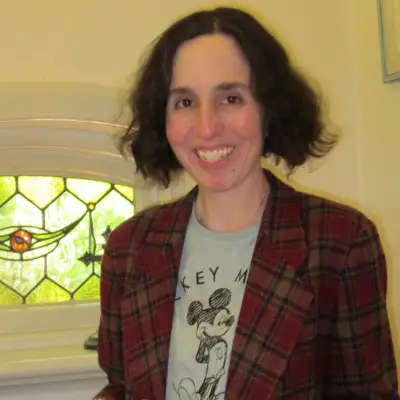
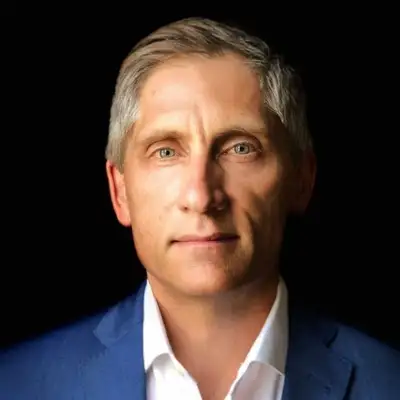
Download MP3[00:00:00] Dr Genevieve Hayes: Hello, and welcome to Value-Driven Data Science, where data professionals become strategic experts. I'm your host, Dr. Genevieve Hayes, and today I'm joined by Blair Enns. Blair is the founder of Win Without Pitching, the leading authority on selling and pricing for expert advisors and practitioners. He is also the author of The Win Without Pitching Manifesto and The Four Conversations: A New Model for Selling Expertise, and is the co-host with David C.
[00:00:33] Baker of the podcast Two Bobs: Conversations on the Art of Creative Entrepreneurship. In this episode, we'll discuss Blair's Expert AI Manifesto and what it means for data experts who want to use AI without compromising the expert positioning they've spent years building. Blair, welcome to the show.
[00:00:57] Blair Enns: Thank you, Genevieve. I'm happy to be here.
[00:00:59] Dr Genevieve Hayes: Like many of the listeners of this podcast, I identify as a data expert.
[00:01:04] It took me years of study and hard work to build this expertise, and it's something that I'm not willing to lose. This is not just because of everything it took to get here, but because my expertise forms an integral part of my identity, and the idea of losing it feels, in many ways, akin to losing a part of who I am.
[00:01:25] So when I recently started hearing from data professionals who spoke of slowly losing skills as they delegated more and more of their work to AI, it made me stop and think, "If this is happening to these people, what skills have I already started to lose due to my use of AI? And more importantly, what practices can I put in place now to prevent the loss of the expertise I value most?"
[00:01:52] It was while I was considering this question, Blair, that I came across your Expert AI Manifesto, a set of principles outlining how experts in any field should be using AI if they want to maintain their expert status while describing the consequences of using AI the wrong way. It articulated many things I'd instinctively felt to be true and clarified the right path for me going forward.
[00:02:19] The manifesto is only 144 words long, but there's a lot beneath the surface of those words, and that's what I'd like to dig into today. So to begin with, for listeners who haven't come across your Expert AI Manifesto, can you give us a quick overview of what it says?
[00:02:39] Blair Enns: I was worried you were gonna ask me because it's a work in progress. I've published it in two or three different places in two or three different iterations. Essentially it says, At a high level that we should all embrace the tools of artificial intelligence. They're changing everything, and it's an exciting time to be using these tools.
[00:03:00] But we should also accept the trade-offs and recognize some of the traps. And one of the trade-offs that you mentioned , I think it's the second point in all versions of this manifesto, is that we have to accept that whatever it is that we delegate to AI is a skill or ability that will atrophy in ourselves or in our team, and we have to be comfortable with that trade-off.
[00:03:25] And I simply say, "Let's not delude ourselves into thinking there is no trade-off here." There is a trade-off. So I am pro-AI. We're building all kinds of stuff, internal tools and systems, external client-facing things. I use it for a lot of writing, but I barely use it at all when it comes to writing what I consider to be content. But that's one of the key principles is this idea that there are trade-offs and the fundamental trade-off is we have to accept that these skills will atrophy.
[00:03:59] And then some other elements I guess I would wrap up the other two, three, or four of them under the banner of integrity.
[00:04:08] Let's not use AI to misrepresent who we are or let's not purport to create something ourselves without the use of AI when we used AI. And there I'm specifically talking about content creation. So if you're an expert advisor or practitioner of some kind and you embrace the idea of thought leadership, you're putting thought leadership out in the world, you're thinking in public and through that thinking you're building a reputation.
[00:04:37] If you're using AI to create this content, you're essentially faking or lying about the thinking that you did not do Behind that. And you're putting this thinking out in the world to prove to people that you have a point of view and you do have this expertise in this area.
[00:04:55] So if AI is doing that for you under your name you know what you're doing. You have that feeling in the pit of your stomach that it's a bit of a lie. So one of the principles is don't lie with your AI. And I seem to have become the person on LinkedIn who's calling out all the AI-generated content and comments, and
[00:05:15] I even joked on a LinkedIn post about how I've clearly trained the algorithm that I'm AI guy because I write about it. I don't mean to write about it. I log into LinkedIn and then end up railing against what's in my feed. So there's a lot we could pull on there.
[00:05:30] Dr Genevieve Hayes: I actually read an article in a newspaper the other day that I could spot was written by AI , and I'm like, "I can't believe they published that in a proper, print newspaper that you buy in the newsagent."
[00:05:42] Blair Enns: Yeah. Somebody sent me an article today on a topic. I'm in this group chat, and it was the topic of the week or so, and my reply was, "That was a really good and thorough post that missed one key point," but I threw in there as an aside, "even though the AI tells are everywhere."
[00:06:00] Like you can clearly tell It's pretty obvious that the person had a premise, and they had a story that they opened with, but they workshopped the whole piece. I was impressed with the length and how well organized it was, and given the nature of the topic and the audience, I thought this is lengthier than it needs to be."
[00:06:17] And it was thorough. It was impressive on every level except it missed one key point. But it was just so clear to me that this was an example of a person's organization skills, not their thinking skill. So If I'm reading a piece like that thinking, "Oh, I wonder if I have this problem.
[00:06:33] Should I hire this person to help me solve this problem?" As soon as I suspect that this was created by AI or largely with AI, I don't think it created the piece entirely. I think the gentleman who wrote this post workshopped it quite rigorously, but it just had all the patterns. And I could even tell it was ChatGPT and not Gemini or Claude.
[00:06:55] It was just so obvious to me. So would I consider hiring this person to help me with this problem? Even though it was informative, let's call the piece helpful. Not for a second. In fact, I would be less likely to hire this person. And I'm not saying everybody would hold the same opinion as I do.
[00:07:10] And I'm not saying I'm right or I'm wrong. I just wouldn't ... unless this person discloses the level at which AI was involved in the writing, I'm like, it's not a reflection of the thoughts in this person's head
[00:07:23] Dr Genevieve Hayes: Going back, I'd like to now dig deep into each of the principles in...
[00:07:28] the version of the manifesto that I read, which was the one that you sent out in one of your email newsletters. Yeah. At its heart, the first principle of your manifesto, basically says that every interaction an expert has with an AI has the potential to affect how they're perceived by stakeholders, clients, et cetera.
[00:07:50] And we should be mindful of that impact and not do anything to damage our hard-earned reputations. Now, you touched on that when you were talking about the damage that using AI to Make yourself sound like a better writer than you are or do your thinking for you can do to your reputation.
[00:08:08] Because in your eyes, that would be someone that you wouldn't want to hire. What does mindful AI usage look like versus usage that might reduce your esteem in the eyes of a stakeholder?
[00:08:24] Blair Enns: So I'm not talking about building tools and in the early days of AI, it's a large language model is used to create language, so the early use cases are thought leadership. So I made the point elsewhere or earlier in that series of posts that there are two reasons to write.
[00:08:40] One reason is to communicate, and the other reason to write is to think. And I'm fond of saying -- I suspect all humans work this way, although I've met some who claim that it doesn't work this way. I have to think through my fingers. The reason I write those posts is because I don't know what I think when I sit down to write them.
[00:08:57] I have rough ideas, and it's not until I get to the end that I realize I have successfully thought through a problem, I have a point of view on it, and then I hit publish. The second reason to write is to think. So writing for the purpose of communication, sending a rejection email to somebody marketing message.
[00:09:18] I write marketing content AI does the first draft of almost all of the marketing content, or at least it'll do a second draft of something that we might write internally. So if you're writing solely to communicate, I'm happy to use AI for what I consider to be pieces that have to be delicately communicated, where there's a danger of hurting somebody's feelings.
[00:09:40] Let's say I'm upset and I'm writing an angry email and I want it to not be angry. I want to make the points without offending anybody. AI is great at that. I'm promoting a workshop or some sort of product. I'm a horrible writer of marketing communications.
[00:09:56] I'm happy to have this atrophy completely. I've never been good at it. So I'm happy to have AI take a pass at it and I'm okay if somebody reads it and goes, "Eh, I can see the AI in that." So for writing to communicate that's perfectly fine in my eyes. And I don't make the rules, i'm extrapolating and projecting onto the world what I think is appropriate. But writing to think, that is, I think I said in one of those posts, there's no world in which I get to where I am without writing. There's no world in which I get to where I want to go without writing because the writing is the thinking part.
[00:10:33] It's what keeps me growing. It's what keeps me moving forward. The idea of delegating that terrifies me. The only people considering writing for that purpose, they're trying to fake thinking, they're trying to communicate that they have been thinking when they haven't been thinking, are people who don't have a reputation
[00:10:53] that they're worried about risking, as you alluded to right off the top. Reputations are built over years, and they can be destroyed in a single moment.
[00:11:03] Dr Genevieve Hayes: If you look at things like any plagiarism scandal or any lip-syncing scandal, there've been so many over the years, I can think of ones dating back to the 1980s, where people were busted plagiarizing their work or lip-syncing in a musical performance, and their career ended overnight.
[00:11:23] Blair Enns: That Milli Vanilli died instantly.
[00:11:26] Dr Genevieve Hayes: That was exactly what I was thinking of.
[00:11:28] Blair Enns: Yeah.
[00:11:28] I was at a conference recently with a university professor who taught, among other things, a course in critical thinking, and he said at the end of every term, he surveys the students, and one of the questions he asks is, "What do you wish you would have done differently this term?"
[00:11:42] And he said the number one answer for the most recent term was, "I wish I hadn't used AI so much."
[00:11:49] Dr Genevieve Hayes: One of the things I've been doing, I'm writing a white paper at the moment, which is outlining my thinking about statistics, machine learning, data science, and I want this to be 100% my own work. So when I'm doing it, I'm writing it in a plain text file. I switch off the internet. I am literally using textbooks and paper, and basically I've gone back to what I was doing 25 years ago.
[00:12:19] And at the end of the day, I am happier than I have been since AI was released.
[00:12:26] Blair Enns: Do you write in Markdown? So I've started writing in Markdown. I don't understand the appeal, but it just... The appeal is strip it down to the words.
[00:12:36] Dr Genevieve Hayes: Yeah. I use IA Writer and Obsidian, and I'm happier.
[00:12:40] Blair Enns: Yeah, interesting. Wow.
[00:12:42] Dr Genevieve Hayes: So many data professionals are using AI to write, computer code needed to perform analyses and fit models. For example, I know one data scientist who told me he hasn't written code by hand in around a year. Now, I don't have a problem with this because I don't see coding as being where that data scientist's expertise lies.
[00:13:04] I see his expertise as being in solving business problems using data. Do you have any thoughts on how that data scientist can ensure his stakeholders who might be non-technical, see that way?
[00:13:18] Blair Enns: I think at the end of the day the quality of the code probably speaks for itself, and how you got there I personally wouldn't be too attached to it. You hear stories on both sides pretty much every week now of large enterprises that massive amounts of developers who haven't written manual code in months.
[00:13:36] And then you hear of stories of organizations saying, "All right, that's enough using AI to generate code. We've generated way too much garbage." And I suspect that's a short-term problem we'll get through. I think obviously today anybody who's a developer, comp sci background any coder who's using these tools and can write and spot good code, that's probably the killer combination. As is somebody with a really good design eye who can write code or even can just use the coding tools. But back to the developer That human in the loop is still really valuable.
[00:14:11] How much longer it will be valuable, I don't know. I don't have an opinion on whether we're gonna get to the point where humans don't need to read and write code. I think if I had to make a bet, I would say there's still many years where that is valuable, but you're going to need fewer and fewer of those people.
[00:14:28] Not everybody's going to need to be a coder. So I'm fond of saying if you see yourself as a service provider, so I'm a developer. I'm hiring myself out to write code basically. You're screwed. It doesn't matter, and I say that to designers.
[00:14:43] I've got a talk coming up next week for a bunch of designers, and I've said for years, you graduate from design school and you hang out your shingle as a designer, you're in trouble, and you've been in trouble for a very long time. And what you have to understand is design is ... You're better off thinking of it as a skill or a tool, and then you ask yourself what is it that you can apply that tool or skill to, and there are three obvious answers.
[00:15:08] One is marketing, so you're creating some sort of communications the purpose of which is facilitating a transaction. The second would be communication, so other communications that isn't marketing. Internal comms. You're designing tools of communication for an audience where the goal is something other than driving a transaction.
[00:15:27] And the third is product development. You're designing some sort of product. Maybe it's a website or an app or something else. And so I think it behooves a designer to think of themselves as in the marketing, the communication, or the product development business and not in the design business.
[00:15:43] Now, there are exceptions at the very top end of the market, the rockstar designers, where if you can get famous for being a designer, then you will be hired to design all kinds of different things. You don't even have to specialize. But that's the .1%, .01% that should not serve as the model for everybody.
[00:16:01] So I'm pretty comfortable extrapolating that to developers. I'm a coder. Eh, , you should be some other form of technologist who uses code and other skills. Like we're coming into this world where obviously specialization is important, but when you have two or three deep wells of expertise that you can weave together, that is a far more valuable proposition And I think you want to resist the temptation to label what it is that you do based on the tools that you use and instead orient yourself to the types of problems that you help solve.
[00:16:43] Dr Genevieve Hayes: Yeah, the way I've been framing it in my own career is helping organizations to make better decisions and reduce uncertainty using quantitative methods.
[00:16:54] Blair Enns: This is an audio podcast, but the audience cannot see me nodding vigorously.
[00:16:58] Dr Genevieve Hayes: Yeah.
[00:17:00] So you were speaking before about the AI atrophy trade-off, and I think that's something that all of us would have experienced in our lives even before AI. And the example I think about is going through high school. You had to progressively specialize and drop subjects as you moved up and you ended up losing skills along the way.
[00:17:25] For example, I did Japanese up to year 10. I dropped it after year 10 and now I can count to 10 and say hello and goodbye, and that's about the limit of my Japanese language capabilities. So that skill has completely atrophied how do you decide which skills are worth protecting and which skills are safe to let go?
[00:17:49] Blair Enns: Yeah, it's a great question, and I think there are different ways you could answer the question one might be what's important to you, even though there's no real kind of extrinsic or marketable value of that skill. Maybe it's important to you to wanna be able to speak Japanese even though you don't have an opportunity to use it.
[00:18:06] And the other is what's important in the marketplace. About a year ago, I realized with thinking these thoughts about atrophying skills, I used navigation as an example, and I thought... So I live in a remote mountain village in Canada, and I was in a city that I used to live in, and it's a grid city that's laid out, north, west, east, south.
[00:18:27] Streets are all numbered, and the avenues are all numbered. It's very easy to navigate in, and I lived in it for three years. So I thought for 24 hours, while I'm visiting the city that I used to live in, I'm going to not use my car's navigation. And it was incredible how I was just lost.
[00:18:45] I used to be able to navigate with a compass and a map through the woods. I did search and rescue like 15 years ago. I was-- Give me a lat, long, and a map, and a compass, and I was pretty good at orienteering, and now I cannot navigate my way through a city that I used to live in not very easily.
[00:19:06] And I didn't care. We're such a connected world. But also, I think if something fundamentally changed in the world, just look up the Kessler Effect if anybody wants to know what I might be talking about, where there's enough space debris that all the GPS satellites are taken out, and we're trapped here on Earth.
[00:19:25] We can't get off this planet. And we have to go back to navigating via map and compass. I'll be perfectly fine because I know that skill. It's latent. It's in there. I could relearn it just like you could if you went to Japan for six months. You would find that skill was not a waste of time.
[00:19:42] But in the short term, until things change, I'm happy to let it atrophy and let the technology do the job that I used to do.
[00:19:50] Dr Genevieve Hayes: Which are the skills that you think are the most critical to retain?
[00:19:54] Blair Enns: You used the word critical. The fundamental skill is critical thinking, therefore, it is writing. It's the form of writing where you're writing to think. You're writing to explore, to learn, or codify, or crystallize what it is that you know only a little bit.
[00:20:12] Dr Genevieve Hayes: A lot of data professionals are going to say, "I'm not a writer. I build models. I do maths. I do something technical for a living."
[00:20:25] Why is it important that I retain my writing skills?
[00:20:28] Blair Enns: I don't know that it would be as important to that person as it would be to me or other professional. But I would ask the question, if you don't learn through writing, then how do you learn? And it might be through doing what you call maths, what I call math. It might be through making models. And then I would suggest in this era where if you want to build a reputation for yourself, you could do that in public via YouTube or Instagram or something else and show off your math problem solvings or your model building skills.
[00:21:05] But it doesn't have to be writing. I know in my world and in my brain it is writing. I'm dealing a lot with mental models. I'm looking for other mental models from other domains and bringing them into my world of sales. So there's a lot of cross-pollination in what I do.
[00:21:24] I read widely instead of deeply and I read books where I have no idea why I'm reading them, and then I find a sentence and I understand why I may have been drawn to this book or I pull some value out of it. And I don't know if there's an equivalent in the data science world that has nothing to do with writing or not.
[00:21:45] What do you think?
[00:21:46] Dr Genevieve Hayes: For me, the way I think is actually through having conversations. It's through what I think of when I'm bouncing thoughts off the person I'm speaking to but also in how I prepare for those conversations because that's when I do a lot of pre-thinking.
[00:22:02] And so what you described there is a perfect example of it. I think through my conversations, and then I make my conversations public through this podcast.
[00:22:12] Blair Enns: There's no writing part of it that you need to insert into the process?
[00:22:15] Dr Genevieve Hayes: Oh, there is a writing part, so all my preparation is actually written, and so I'm writing in that respect. But I find that It's the conversations which is where I get a lot of my ideas from
[00:22:27] Blair Enns: Here I'll share my whole production function here. So I write four days a week. I write four short posts a week in our our academy, our client portal. And then one day a week, the fifth day, I write a longer post that goes out to the email list. That longer post is usually drawn from one of the shorter posts that I wrote that week or the week before.
[00:22:50] So I'm doing little tests of ideas, just starters, small ideas in these posts, and then I grab something that's longer and I put it out there, and that goes out to 19,000 people. And then I do a podcast every two weeks where my co-host and I take turns interviewing each other. So once a month, once every four weeks, I'm being interviewed on a topic, and I will now have four long posts that I can choose from.
[00:23:18] So I'll pick the most meaningful one to me, and then I have to read through that post again. I'm reminded of what I Learned and forgot. Then I have a conversation with somebody about that material, and I process it to the next level, I guess is one way to think about it. And then eight weeks later, that podcast is released, and I listen to it, and I find it's not until I've listened to me talking about something that I wrote that now it's locked into my brain.
[00:23:52] And I'll forget a lot of what I've written if it's just the writing part and moving on. So there is the talking about it and then listening to the recording of me talk about it, where I forgot that I had said that I had that insight in that moment. To me, that's the total package for how I learn and grow.
[00:24:12] Dr Genevieve Hayes: Yeah, that actually sounds very similar to the way that I learn things. It's the preparation, the conversation, and then I listen to it again when I'm editing.
[00:24:22] Blair Enns: It's almost like the flashcards method of remembering things, where you increase the space between how you're doing the flashcards daily, and then you do it every few days and just when you're about to forget it, then you expose yourself to it again. There might be a better cadence than the one I'm using, but I really like it right now, and it's 25 years in the development.
[00:24:43] Dr Genevieve Hayes: When I was at school, they said in order to properly learn something, you have to go through it at least three times. So that makes sense in the context of what you've just said.
[00:24:52] Blair Enns: Glad to hear.
[00:24:53] Dr Genevieve Hayes: So if you could distill the expert AI manifesto down to a single piece of advice for a data professional who wants to use AI without compromising their expert standing, what would it be?
[00:25:06] Blair Enns: I'd just combine a few things and just say use it honestly with integrity, where if you had to explain to your mom what you did or how you used it, you wouldn't feel ashamed. While knowing that whatever you're using it for is a skill that's gonna atrophy, and you just need to be comfortable with the trade-off and don't delude yourself into thinking there's no trade-off.
[00:25:26] Dr Genevieve Hayes: So for listeners who wanna get in contact with you, Blair, what can they do?
[00:25:30] Blair Enns: They can find me at winwithoutpitching , .com. So I write weekly, and I have an app, the Win Without Pitching app, where if you download the app, you can get access to my daily writing. So you can go to the Apple App Store or the Google Play Store and you get access to all of my free content, including the stuff that gets posted daily in the academy, and then you can even comment on the posts there.
[00:25:53] I'm also on LinkedIn. I'm not on any other social media. So I'm Blair Enns on LinkedIn
[00:25:58] Dr Genevieve Hayes: And that's it for today's episode of Value-Driven Data Science. But if you want more from Blair, next week you can catch our Value Boost episode, where we explore Blair's four conversations framework and how data professionals can use it to sell their expertise. And if you found today's episode useful and think others could benefit, please leave us a rating and review on your favorite podcast platform.
[00:26:24] That way we'll be able to reach more data scientists just like you. Thanks for joining us today, Blair.
[00:26:30] Blair Enns: Thanks, Genevieve
[00:26:31] Dr Genevieve Hayes: And for those in the audience, thanks for listening. I'm Dr. Genevieve Hayes, and this has been Value-Driven Data Science
Creators and Guests