Episode 117: Writing Your Way to Authority as a Data Scientist
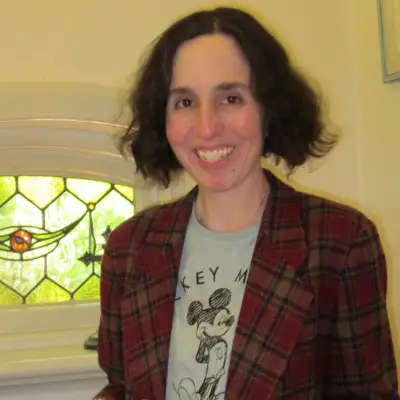
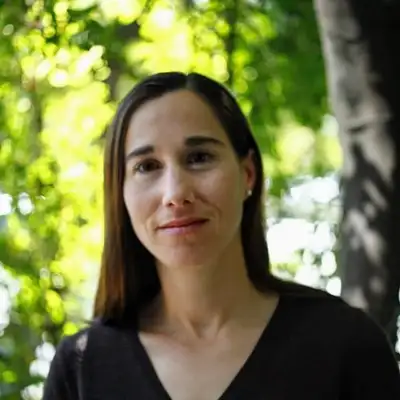
Download MP3[00:00:00] Dr Genevieve Hayes: Hello, and welcome to Value-Driven Data Science, where data professionals become strategic experts. I'm Dr. Genevieve Hayes, and today I'm joined by Cynthia Dunlop. Cynthia is the co-author of Writing for Developers and senior director of content strategy at ScyllaDB. She has co-authored four books for software developers and tech leaders and authored hundreds of articles for publications including TechCrunch, IEEE Computer, and The New Stack.
[00:00:36] In this episode, we'll explore how data professionals can use blog posts to build genuine authority and stand out in a world increasingly flooded with AI-generated content. Cynthia, welcome to the show.
[00:00:51] Cynthia Dunlop: Hi, thanks for inviting me
[00:00:53] Dr Genevieve Hayes: It's no secret that many data scientists chose this profession in part because they enjoyed maths and wanted to avoid writing essays.
[00:01:02] When I was managing a data team, my team members would happily spend hours writing code, but getting them to document their results in the form of a report was a lot like pulling teeth. Yet good data work doesn't speak for itself. I've met data professionals who are brilliant at their jobs, but who are repeatedly overlooked for recognition because they can't articulate the value of what they bring.
[00:01:26] The most impactful data scientists within any organization are frequently the best communicators, and building authority beyond your organization is virtually impossible unless you're capable of sharing your ideas with the world. Technology has made it easier than ever to get your message out. Anyone can now start a blog in just a matter of minutes.
[00:01:48] But building authority isn't just about writing. It's also about getting your writing read, and in a world flooded with AI slop, standing out from the crowd has become harder than ever. Cynthia, you come at this topic from an interesting angle. Most of our listeners are technical professionals first, with writing being something they need to do in order to support their career.
[00:02:14] However, you're first and foremost a writer whose specialty is technology and who often collaborates with people like our listeners. What initially drew you to technical writing rather than, say, mainstream journalism?
[00:02:28] Cynthia Dunlop: It's a bit of a meandering journey, to be honest. But I think it stems from a few main things. One, I've always enjoyed analyzing words and written work that other people have done. Two, I've learned to enjoy helping others start writing and to optimize their writing. And then three, I help developers share their work, get more attention for their work, and that's something that they're, as you mentioned, generally very allergic to doing.
[00:02:55] They'd like to just create this wonderful thing and put it out in the world and then let it be and hope that everybody finds it fantastic. And I really like that aspect of it, and I find I'm good at that, and I like to be involved in those processes
[00:03:07] Dr Genevieve Hayes: When you first come to work with the developers, do you often find that they just wanna hand you their work and say, "Here, you make it look good," or are they interested in full-blown collaboration?
[00:03:21] Cynthia Dunlop: Usually not even that much. Usually it's, "Oh, we built it. It's not that interesting. It's not as good as it could be yet. So we'll write about it later. We'll share it later."
[00:03:29] Need to really nudge them to, to, "No it's great now. You've made some wonderful, progress.
[00:03:34] Let's share it now, and we can always write more about later when it's all done."
[00:03:38] Dr Genevieve Hayes: I think you've just described me there. I often have that whole feeling, whatever I've done isn't good enough, and I wanna wait until it gets better to share it with the world. What helped me was forcing myself to write something once a week, so therefore even if I don't think what I'm doing is good enough, at least it's forcing me to put something out into the world
[00:04:00] Cynthia Dunlop: Yeah, it really helped when I was working as a technical writer, I would be embedded with a development team, so I would interact with everybody on a daily basis. I'd sit in their meetings, and we'd collaborate on everything. We'd brainstorm how to present different things. So I was able to establish a good relationship of trust there.
[00:04:15] And so when it came time to, "Okay, we need someone to write an article on such and such," or, "We need to write a white paper on such and such," I already had a good understanding of the topic. I knew who was the expert. I had some idea of their personalities, and I also knew how they liked to work. Some people would like to just sit down in a room with a recorder and start talking through it, and then I could, create a draft based on that, whereas others they just need to have their time alone, and they're going to write it up, and then we can iterate in writing.
[00:04:40] Different people have very different approaches to getting things done. You can't force everybody into one model
[00:04:47] Dr Genevieve Hayes: In your book, Writing for Developers, you list a number of reasons why technical professionals should write blog posts. For our listeners, the most relevant of these is building authority beyond your organization or as you put it in your book, building a personal brand. How does having that goal in mind influence your topic choice and the way you frame your content?
[00:05:10] Cynthia Dunlop: I don't know if that goal influences your content choice or just the need to rise above the sea of AI slop should be what's influencing your content choice these days. But I think it's always been important to choose a topic that's personal to you, but I think now more than ever, if somebody wants just the generic informative take on a certain subject, they can go to an LLM and get all the information they ever want in whatever format they want, and they can get it there.
[00:05:39] But it's the personal touch. It's the full personal experience of how we built this or how we struggled through this problem, how we hunted down this bug or this and all. And I think that's what draws people to writing, and if people don't read your writing, you're gonna build the authority
[00:05:53] Dr Genevieve Hayes: I thought that was interesting, that comment you just made. The need to rise above the sea of AI slop influencing your choice of topic. Can you give me an example of what you mean by that?
[00:06:06] Cynthia Dunlop: I think some of the most popular tech bloggers in the development industry at least are the ones that people recognize their personal brand. They've spent years building this brand. Jorge Oros, he has I think it's the most popular newsletter in tech on Substack Pragmatic Engineer, and he does individual research.
[00:06:23] He does surveys. He always has access to the top people in tech, does interviews, on-site visits, and he always has this original information that you could only get from him. So that's interesting. Another person that comes to mind is Charity Majors, who's known for her hot takes, and she's never one to spare her words.
[00:06:41] She tells you exactly what she thinks, and that's why people enjoy it. People probably don't disagree with everything she writes, but they know that it's always interesting, it's always honest, and they like to engage with it. Those are the things that people, they see that URL on Hacker News or wherever oh, it came from and they're there to read it
[00:06:57] Dr Genevieve Hayes: Okay. So an LLM, for example, could easily write 1,000 words on the best metric to use for evaluating a machine learning model. So should you use accuracy versus precision or recall? But what's important is my personal experience with using the wrong prediction metric or my personal experience with building whatever tool that I'm building.
[00:07:27] Is that what you're saying is what gives me the authority over something that was produced by an LLM?
[00:07:34] Cynthia Dunlop: I think the LLM in that case is going to give you a few different options. It's going to give you the pros and cons of each options in a very sanitized way, and then I can almost guarantee you that the end, the answer's going to be, "It depends." Whereas what you probably are much more interested in reading are a few firsthand experiences of people that actually tried using those models, that applied those models in different ways, and what worked for them and what didn't work for them and what they hated and what they would do differently if they had the ability to go back in time, hit the same subject again, approach that same problem again.
[00:08:09] I think that's what's most interesting to humans. I think you would probably start with that LLM research just to get the lay of the land. But before you move forward with any particular approach, it's always nice to hear those actual lived human experiences of people who actually worked with them firsthand and aren't landifying the experiences and wiping out the...
[00:08:30] Sometimes it's those outliers the exceptions, the little things that didn't quite work out as expected that are the most interesting, and that can really determine which path you take, and those are generally the kind of things that LLMs don't share with you
[00:08:43] Dr Genevieve Hayes: Yeah, because they've never had that lived experience. Basically, they've read a ton of textbooks on the topic, and they're just regurgitating the facts
[00:08:50] Cynthia Dunlop: And the most average facts, the most common facts
[00:08:53] Dr Genevieve Hayes: Yeah. Cause at the end of the day, it's just an averaging process
[00:08:56] Cynthia Dunlop: but in the book we have the three Ps test for picking a topic that's good for you. It's the topics that you're personally most proud of, pained by, or otherwise passionate about. So I find that's a good guideline. Those are the ones that you're really going to be enthusiastic about, and I think your enthusiasm and your just focus on it will come across to the reader
[00:09:18] Dr Genevieve Hayes: So it's basically your biggest successes and epic fails where you can teach people a lesson
[00:09:25] Cynthia Dunlop: Or maybe just things that people constantly get wrong, a misconception that you want to clarify because you've experienced it in a different way. Maybe there's a new trend and everybody is saying it's great but you've had a different experience or vice versa. Maybe everybody is complaining about such and such, and you found a way to make it work, and so you're pained by seeing everybody else, frustrated with it
[00:09:46] Dr Genevieve Hayes: Okay, I get that. So it sounds like you're saying that the key to authority is authenticity
[00:09:53] Cynthia Dunlop: Speak to what you know and be transparent and honest about how much you know or you don't know. If you're going to talk about, your experiences with some new data science technique... I'm sorry, I'm not a data scientist, so I don't have all the details. But if you talk about what we learned by applying such and such, you're sharing your experiences.
[00:10:13] You're being honest about that. Whereas, if you go into something like how you should blah, blah, blah, blah, or the ultimate guide to doing blah, blah, blah, blah, that's not authentic. You're trying to extend more than what you actually did and what you actually know. So focus on what you experienced, and people can't argue with what you experienced, and be honest about what didn't work what you would do differently.
[00:10:34] Those are the tidbits that make it human and make it interesting
[00:10:37] Dr Genevieve Hayes: One thing I really loved about your book are the blog post patterns that make up a large chunk of it. These are frameworks for writing blog posts in a number of different styles, along with real world examples and recommended dos and don'ts. Is there a particular pattern or framework for structuring blog posts that you consider to be particularly well-suited to demonstrating authority and expertise?
[00:11:03] Cynthia Dunlop: I think the three that are pretty generally applicable across all industries are probably the lessons learned, which is maybe not exposing your authority, but showing that you're engaging and you're sharing, and you're helping lift the community as a result of your mistakes. Another one is how we built it.
[00:11:22] So that could be in the dev world, it's how you built this great algorithm or product or whatever. I guess in the data science world it could be, how you built this great model or how you applied this new strategy. And sometimes those are a little loftier. Those tend to get the most authority if you're writing, say, on behalf of the team of, some really big startup.
[00:11:44] You're sharing how the whole company built this, and you're using the royal we, and you're speaking on behalf of everybody. And then another one would be what we call thoughts on trends, and that's, your take on different tools or techniques, and that's for
[00:11:57] Those topics of things that you're pained by, those might be good things for thoughts on trends
[00:12:01] Dr Genevieve Hayes: You were mentioning, the what we built and lessons learned. That reminds me of you often see blog posts or research articles written on those topics by developers from the big tech companies, like Facebook, Anthropic Google, things like that. And those have really become, gold standard pieces of research that everyone else refers to.
[00:12:25] So I would imagine that if you're working for a big tech company, you could have a lot of influence if you write something like that. Is that your experience?
[00:12:34] Cynthia Dunlop: I've heard of engineers that they've done that and they've just had a flood of job offers and book offers, et cetera. So I think that's definitely a possibility, though I think it's just as common to have people that wrote something at a small startup that just happened to hit Hacker News to get the same results.
[00:12:53] I haven't worked in the big tech blogs, but I've heard that they can take sometimes months to almost practically a year to get things approved. So it can be a scary process there from what I hear
[00:13:05] Dr Genevieve Hayes: by mentioning the startups, you just touched on what I was gonna ask next, which is, what happens if you don't work for something as big as Google or Anthropic? Does that influence the amount of impact that you can have?
[00:13:17] Cynthia Dunlop: I think a lot of the article aggregators like Hacker News and Reddit sometimes often frown upon the more corporate ones, and they prioritize the personal blogs. They feel that since the others do have those long review cycles and they are touched a lot by corporate comms, that they're not trustworthy.
[00:13:35] But if they see someone is publishing something on their own blog post or from a small startup, they're going to be a little more intrigued by it, especially if it's, say, an open source project
[00:13:45] Dr Genevieve Hayes: Yeah I've spent so much time reading Hacker News over the years, and just, the idea of getting published in it seems impossible. How do you go about doing it?
[00:13:55] Cynthia Dunlop: I don't think you can ever try because I think sometimes it just happens as a happy accident. I think the ones that if people try too hard, then that's when it gets scored. As a side project, a spinoff after this book, I've interviewed, I don't know, probably about 20 or so leading tech bloggers from Jeffrey Atwood to, Simon Wilson Charity Majors again, and they all have very different perspectives on writing and how they approach everything.
[00:14:23] But one thing they all agree on is that you can never play the after news game. The things that you're most proud of, you spend the most time on, sometimes, they go unnoticed, and then you do some kind of throwaway thing that you write and publish and don't even think about it, and then that's the big hit.
[00:14:37] It's just really hard to predict what people are going to latch onto
[00:14:41] Dr Genevieve Hayes: I have an email list and I send emails out to that list twice a week. And I've found whenever I think, "Wow, I've written this really fantastic newsletter," it's crickets. No one seems to care. But when I write something where I'm writing something because I have to get something out because I've committed to this, and I don't think this is good enough, but I'm just gonna press post anyway, that's when I'll get half a dozen emails saying, "Wow, this is really great work."
[00:15:09] So I don't know.
[00:15:11] Cynthia Dunlop: Maybe people react to the fact that it's somewhat less polished. Maybe they like that rougher take that you've spent less time on and it seems more authentic to them. Who knows?
[00:15:21] Dr Genevieve Hayes: Yeah, I think that's what they have in common. It's the things that are just my thought on this topic, which might be really weird, but hey, at least no AI generated this because no AI would come up with an idea this ridiculous. But yeah, I suppose that's it. It comes back to authenticity.
[00:15:39] Cynthia Dunlop: Yeah. People like weird and different
[00:15:41] Dr Genevieve Hayes: Yeah. So I'd like to get back to the topic of AI. In recent years, AI chatbots have completely transformed the writing landscape. As a professional writer, what has that looked like from where you sit?
[00:15:57] Cynthia Dunlop: Painful. In one word, painful. I cringe when I read things that have all of those AI tropes just because the wording is so bland. But that's often not the worst of it, you see something, and you kinda scan it, and the headings look interesting, and then you go, "Okay, I'll see," but I put everything on Instapaper, and then I read it later, and then I go back to look and "Wow, it doesn't really actually say anything."
[00:16:18] There's a lot of words, but it's not really saying anything. So that's just the content is thin. There's no interesting perspective. There's no interesting insights. So I think that's probably my main complaint with it. But I think it is actually really good at helping you improve your writing.
[00:16:33] Just don't have it write for you
[00:16:36] Dr Genevieve Hayes: Yeah. I actually have screamed at AI, all caps "Do not write this for me. However, I would like you to give me feedback on this piece of writing that I've done so that I can see where the holes are." And it's helped me to pick up some areas where I'm particularly poor at my writing and to improve them.
[00:16:55] For example, I'm really poor at writing the end of sections of reports. My endings tend to be things like, "And this will be seen in the next section," and that will be something that AI will pick up on and say okay, that's terrible. Perhaps you could look at it this way, and that might help you to improve it."
[00:17:16] Give people some indication of what's at stake if they don't do what you're recommending. And I find that helps me a lot as a writer
[00:17:25] Cynthia Dunlop: I think by the time you're done with a draft, it's all so very clear to you, and then you're also in love with all of the words that you've spent all this time writing, and it's really hard to experience it as your readers are. And that's where the pure objectivity of AI is just such a beautiful thing.
[00:17:41] Even your coworkers, your peers are going to be, maybe a little more hesitant. They're going to hold back some of their criticism just because they know you and they don't want you to hate them. But LLM doesn't care if there's parts that are just not clear, not logical.
[00:17:56] It will tell you as long as you prompt it not to be brutal, not to suck up to you, et cetera. It can, find parts that are distracting to the reader, that are just little side paths that, maybe you're in love with, but it doesn't do much for the reader.
[00:18:09] I think it's really good at putting you out of your own, tunnel vision and helping you take the perspective of the reader. What are some things that the average reader or the target reader, which you're really interested in, where might they object to your claims?
[00:18:22] Where do you need to provide more information to make these arguments more convincing? And it's really good at finding those
[00:18:28] Dr Genevieve Hayes: The other thing I've found if I'm writing something for an audience that I'm not familiar with, I will often get it to look at my writing and say, "Can you look at this from the point of view of someone who's in this demographic group?" HR leaders, for example. I don't understand where they're coming from, but it can look at my work and say this isn't gonna be clear, and you might wanna emphasize this because this part is gonna be more relevant to them."
[00:18:55] Cynthia Dunlop: Or if you're writing for a publication that you're not used to writing for, it might give you some clues as to what's going to be just too basic for them, and you might wanna cut or you might wanna just abstract into a link to some basic, background source and then where you wanna focus it differently for that particular audience, as long as it's a well-known publication.
[00:19:14] Dr Genevieve Hayes: I will try that at some point are there any other ways that AI can potentially be used to accelerate the writing process without losing your voice and compromising your authority?
[00:19:25] Cynthia Dunlop: One way that I've been playing around with the past few weeks is having it interview you to really think through the questions you should be answering before you start writing a blog post. So trying to create a skill that will force you to answer all these different questions one by one, and if you're answering them too vaguely or just, blowing it off and not being specific enough, it'll force you to answer it more specifically before you move on to the next question.
[00:19:51] So who are you writing this article for and why? What do they already know about the subject? What's so special about your take on it? Why does the reader really care about what it is that you're writing? What kind of evidence are you going to use to support your claims to convince this reader?
[00:20:07] Where are they going to object? How are you gonna flow through the different topics that you wanna cover? I think that's a good way , to assist that process. I think the hardest part of writing it's extracting all those ideas from your brain and then getting them into a paper, and I think just going through that exercise, it forces you to not only think through it, but put it down in some writing.
[00:20:28] And a lot of those might end up being parts of your document as well
[00:20:31] Dr Genevieve Hayes: With those interviews what does the AI output at the end or does it really matter if it doesn't output anything at all? Is it just the process of answering the questions that makes a difference?
[00:20:42] Cynthia Dunlop: That's what I've been struggling with, and I last landed with it just outputting what your answers to everything all together and saying, "Is there anything you want to rethink now that you've looked at that?" And maybe to point out any contradictions. Like you said that you were going to write it for this person, but then you decided that da, and that doesn't seem to jive properly
[00:21:01] Dr Genevieve Hayes: Yeah. That's a good idea 'cause I often find when I get stuck on things, I'll just have a conversation with Claude and just say, "Yeah, I'm stuck on this, and I don't want you to write the work for me, but can you help me?" And he'll start asking me questions like that. So it is the interview process.
[00:21:20] And a lot of the time, Claude just asking me questions tell me what you're trying to say." How would you explain this if a business leader was in front of you?" "What would you tell that business leader is the most important point?"
[00:21:34] And a lot of Claude's conclusions at the end will be you've just answered your own question. This is exactly what you need to put." And Claude isn't telling me the answer. Claude's just helping me to find it myself
[00:21:48] Cynthia Dunlop: And also for even finding those really clunky sentences that are difficult for the reader to process. It makes sense when you're writing it, but then when some reader gets it, they can't possibly process it. I think it's good at pointing those out, and what I like to have it do or what I like to have other people have it do is to find me the most clunky, difficult to process sentences and then suggest, three to five different ways to revise each of them.
[00:22:10] So you're seeing the options, but you're not getting set into any particular one, and that might get your mind going, and you might, use parts of the second one and a little part of the third one and then completely different starting and ending. So you see more options that way
[00:22:24] Dr Genevieve Hayes: Okay. So you're not opposed to getting AI to help you rewrite bad sentences, it's just you don't get AI to write your experience for you in the first place?
[00:22:36] Cynthia Dunlop: And I cer-certainly hope that people don't take any of those sentences verbatim, but I think it just helps you get out of that lock-in too. This is my sentence. This is how I want it to be. Like you see, oh, I could do it this way or that way, and then you probably blend those options with hopefully whatever you really meant
[00:22:52] Dr Genevieve Hayes: In a world where AI has made it easier than ever to flood the internet with mediocre content what's one thing our listeners can start doing tomorrow to actually get people to notice and read their work?
[00:23:04] Cynthia Dunlop: One thing tomorrow, I would say to make a list of people whose opinions you really respect for whatever reason, and share your content with them personally with, a request for their feedback. Reach out with a genuine message, why you respect that specific person. Don't be spammy.
[00:23:25] Don't send it to everybody you've ever thought of as an influencer in your industry. But, maybe, five or 10 people that you know that you worked with in the past and, "Hey, I wrote this thing. I really admire your work because of blah, blah, blah, blah. I wrote this thing. Do you have any feedback?"
[00:23:39] And worst thing that happens is they ignore you, and some people will ignore you. One positive thing is they might offer you some feedback and helps you improve not only that piece, but everything else that you write potentially. And then an even better outcome is they say this is great. I'm gonna share it with my network."
[00:23:56] Dr Genevieve Hayes: Is this including people that the person might never have met before?
[00:24:00] Cynthia Dunlop: I would include people you don't know. Again, some people might ignore you, but if, one person latches onto it and it's someone you respect, and they offer you either good feedback or they offer to share in their industry or they start following you and they might notice the next thing that you write, then I think it's a win
[00:24:17] Dr Genevieve Hayes: For the listeners who want to get in contact with you, Cynthia, what can they do?
[00:24:21] Cynthia Dunlop: Find me on pretty much any of the socials. Not too many Cynthia Dunlops out there, especially ones who wrote books
[00:24:27] Dr Genevieve Hayes: And that's it for today's episode of Value-Driven Data Science. But if you want more from Cynthia, next week you can catch our Value Boost episode, where we explore how blog writing can open doors to conference speaking, book deals, and other opportunities that progressively compound your authority.
[00:24:48] And if you found today's episode useful and think others could benefit, please leave us a rating and review on your favorite podcast platform. That way, we'll be able to reach more data scientists just like you. Thanks for joining us today, Cynthia.
[00:25:03] Cynthia Dunlop: Thanks for having me
[00:25:05] Dr Genevieve Hayes: And for those in the audience, thanks for listening. I'm Dr.
[00:25:08] Genevieve Hayes, and this has been Value-Driven Data Science.
Creators and Guests