Episode 121: What Hybrid Agentic AI Organisations Mean for Data Science
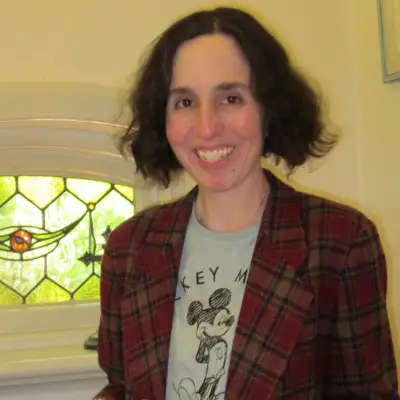
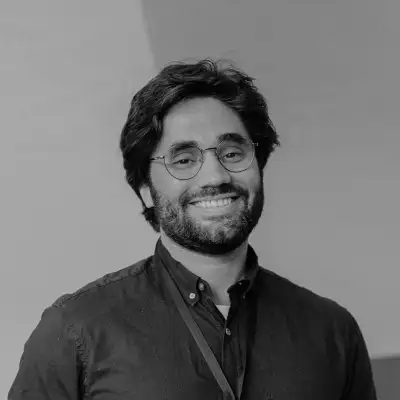
Download MP3[00:00:00] Dr Genevieve Hayes: Hello and welcome to Value Driven Data Science, where data professionals become strategic experts. I'm Dr. Genevieve Hayes, and today I'm joined by Victor Coimbra. Victor is a partner and CTO at Artifact, the world's largest pure-play AI consulting firm, and he co-founded the firm's Latin American operations.
[00:00:26] In 2024, he was recognized in the Forbes 30 Under 30 Brazil list for his outstanding contributions to AI innovation. In this episode, we'll explore the current shift from AI pilots and co-pilots to hybrid human AI agentic operating models and how this fundamentally changes what organizations need from their data professionals.
[00:00:54] Victor, welcome to the show.
[00:00:56] Victor Coimbra: Very glad to be here. Very happy to have this discussion
[00:01:00] Dr Genevieve Hayes: When the AI wave first hit, it was all about chatbots, and tech CEOs promised a future where humans and AI would work together to deliver better outcomes than humans could manage alone. Then, as AI progressively became better, businesses started to question whether they needed human workers at all, and the first wave of AI-driven redundancies hit.
[00:01:24] The tech CEOs suddenly started changing their tune and began warning of the impending white-collar job apocalypse, especially following the advent of AI agents. But something interesting happened on the way to the future. It turned out that AI agents aren't cheap and that experienced humans are capable of insights AI can't manage alone.
[00:01:48] Businesses that had previously fired human staff in favor of AI quietly started hiring the humans back, and the tech CEOs' tune changed once again. So now we're back where we started, with AI and humans working together once again, but with technology vastly superior to what it was when the cycle first began.
[00:02:10] This shift away from an AI-first workplace towards a hybrid agentic organization, where humans provide the judgment, creativity, and context while AI agents provide the speed, memory, and execution power, is something that you're a strong believer in, Victor. You've also helped multiple global enterprises to deploy transformation programs to make such a shift.
[00:02:35] As someone who's actually seen what this version of the future looks like, can you share with us what a human agentic organization actually looks like in practice and what it means for how humans and AI divide work?
[00:02:49] Victor Coimbra: This a excellent question. Right now we are in another industrial revolution. It's not the first time that we need to share our time and our space with machines,
[00:02:58] We start this process centuries ago and it's not the first time that everybody got scared about being replaced, and this is natural, is something that's is a cycle that's gonna always happen, and we're just seeing another cycle, and I'm very glad to be alive at this moment to see a live industrial revolution happening.
[00:03:17] And a strong belief that like any technology when they arrive they shake a bit the market, they shake a bit the way that we operate. And this was very clear on the past three years, the shift between AI as a tool, as you mentioned, to be more AI as a coworker AI as someone that I can count on to accomplish my tasks.
[00:03:40] And I think us users we are getting more and more on this mindset. I think one of the biggest moment probably was with the OpenClaw, everybody was talking about OpenClaw and this idea of always-on agents. But when we talk about organizations there is still a long way to get there.
[00:03:58] I still think that the mindset is still a old mindsets about thinking AI as tools and not as coworkers. And I think this is where leaders and organizations needs to emphasize in order to innovate and transform, the first step is to shift this mindset because right now the real productivity gains is not on I'm be able to do my job 30% faster.
[00:04:24] That's not where the value actually lives. The value lives when I have a shared cognitive capacity that I can expand, because now I have more workers, and I can raise the quality of my work. So it's not about gaining time or be more 30% productive, but more about that now I can expand my workforce and actually improve the quality of the product or service that I'm providing on the end of the day.
[00:04:56] And this is for me, what ma- means the hybrid organization, the hybrid organization is just a new way to work at same space as machines. In the factories, we figured out that on a physical space. Now we are figuring out that in a digital space and how to extract the best of that in order to produce better quality in terms of products and service for societies as a whole.
[00:05:21] Dr Genevieve Hayes: You've actually worked with global enterprises where you've implemented these transformation programs. To give our listeners an idea of what this looks like, can you give us an example from your own work?
[00:05:35] Victor Coimbra: I think the best way to describe that is to tell a little bit how I work on my daily basis. So basically we in Artefact has a hybrid organization. So when I look to my org chart, I have humans, employees, and I have synthetic employees,
[00:05:52] so the same budget that I have to hire, I have also to build agents. And the way that I treat demand for both is actually similar, because on the end I have a shared cognitive capacity. So let me tell you a story about Bob, okay? Bob is our front-end developer, every day I open a ticket for Bob saying, "Bob we need to fix this website in here.
[00:06:15] We need to develop this code, or we need to deploy this model." The same way that I would do it with anyone, and Bob goes there, he build a plan. He goes back to me and say, "Hey, Vic, should I validate this plan?" I say, "Yes, Bob, you can validate this plan." We interact a bit for a while. We understand.
[00:06:34] He produce some type of work. I revise. The routine is almost the same on the end of the day. The only point is that Bob is not a human. Bob is a synthetic employee. And I think this is a good example on practice how a hybrid organization should look like. When you start your day and you figure out that on the end nothing changed, like you just interacted with different types of profiles, and these profiles can be humans or can be machines is when you know that you probably are in the right place.
[00:07:08] And I think that's what I tell all the C-levels that we advise, is that first thing when you start your day, look at your day, and look at the amount of interactions that you have with humans and agents. At the moment that those interactions seems extremely natural for you, this is where you are probably mature enough to actually call you a hybrid organization.
[00:07:32] But there's a path to get there, and that's not that easy to get there. But for example, in Artefact uh, that's how we naturally work. We don't think that much about it. We have demands, and we assign this demand to people and to agents, and they are there. They are our cognitive shared capacity.
[00:07:51] Dr Genevieve Hayes: How do you decide what tasks to allocate to an artificial employee like Bob versus Bob's human equivalent?
[00:08:00] Victor Coimbra: That's an excellent question, and I think this is the first question that needs to answer. The first thing, before implement AI, before think about models and what's more intelligent model, et cetera, you need to think what's are the archetypes of the usage that you're gonna have.
[00:08:17] In Artifact, we classify four levels of archetypes of questions. So basically, we have what we call more creative tasks, and this is mainly human-based because we believe that humans needs to be put to do what humans are very good at, we are very good on creative solutions. We are very good on empathy.
[00:08:39] Sometimes to talk to customers, if we put a agent to talk to a customer, he gonna probably be annoying. So This is what we need to cultivate, and that's the first archetype of tasks that we have as a corporation. We have genuine tasks that need creativity and empathy, and that's gonna be ours human The second archetype is more what we call a collaborative task.
[00:09:01] So this is more human-driven tasks, but humans can use AI to accomplish that. For example, create a briefing, create a email think about a presentation. Now, build a PowerPoint. A human is on the driver's seat but he use AI to help him, and that's what we call collaboration tasks
[00:09:22] Something that's needs some type of accountability on the end of the day on the human side, but AI can help you, the human, to get there. The third is what we call prototyping, and this is where we need to build something to have more concrete ideas, so imagine that I already have a creative solution, I already have some type of collaboration, but now I have to build something, and that's where it's more becomes a shift between agent-driven and human-driven.
[00:09:51] And now the agent is leading. Now the agent start to building and actually provide us with steps along the way. "Do you like that? Did you prefer this way? What do you think about this solution?" And we are more on the back seat just give us opinions and guidance. And then there's the fourth archetype that's pure delegation, it doesn't matter for me the how, just matter the result,
[00:10:16] and this is classical things that we automate, for example sending a client some type of a invoice of payments. Make sure that we create accounts or reset passwords. Those are delegation that are fully managed by Bob. I don't even see these type of tasks.
[00:10:34] Bob handles and then if there's some problem, he escalates to me. But that's fully managed by AI. So I think this is a good framework for leaders to understand how to start classifying which task belongs to what. I think these four archetypes covers most of the tasks that we have inside of most organizations.
[00:10:56] Dr Genevieve Hayes: This is interesting because with AI, you've got all these different types of AI tools. You've got your AI chatbots like Claude and ChatGPT. You've got your AI copilot tools such as Microsoft Copilot. You've got AI coding tools like Claude Code, for example, and you've got your agentic AI tools like Claude Cowork or OpenClaude.
[00:11:19] Listening to you describe all those different archetypes, I'm thinking that different types of AI tools would be better suited to different tasks. So for example, Bob would obviously have to be some sort of agentic AI tool like OpenClaude or Claude Cowork, and the one you mentioned, where the humans were basically in the lead where they were doing the presentation, that sounds like something you could do with a chatbot.
[00:11:46] And the one where it was building things, that would be something that you'd use a Claude Code or similar for. Is that how you have this structured at Artifact?
[00:11:58] Victor Coimbra: Perfect. And I think this is where most leaders do the first mistake. Because, again, IT leaders they usually think about tools, and here we not think about tool, we think about capability. And exactly as you said the first choice is to select the correct tool to the correct work.
[00:12:15] Because on the end, the LLM has different ways to interact with the world, the LLM, has different ways that you can use it. And I like to think like cars, I have different type of cars. I have a truck, I have a van, I have a bus, I have my daily car, I have a Ferrari, you're not gonna use maybe your Ferrari to go to a farm, right? You're not gonna use maybe to go to a trip with your family. So
[00:12:45] the same way in here is what we call a lot, and this term is very new, the concept of harness, there is a way that you need to harness the power of the LLM, and this way manifestates in different types of forms. So these tools on the end, what they are doing, they are just helping you to manage this power in a much more concentrate way for this specific task.
[00:13:10] For example, chatbots like ChatGPT is much more a collaboration type of tool, where you lead and you use the help of the AI to accomplish something. Cowork, like Cloud Cowork, is more on the prototype when you have something more solid a more multi-step process that you want to accomplish, but you want the AI to take the lead, and then you are more a validator.
[00:13:34] And for example, OpenCloud, again, you do not care about the how, you just care about the results. So it's super important for you to select the correct tool or the correct harness to the end of your outcome or what you want to try to accomplish and I think that's where most leaders start their first mistake because they like to buy license, and they like to believe that once they buy license, all the problem is over, and they figure out that probably nobody's using the cost is exploding even if nobody's using.
[00:14:04] So to drive adoption, the first thing is to select the correct tool to the correct task and understand why you are using that tool. It's to collaborate, it's to delegate, it's to prototype. So I think this probably the first thing where leaders should start from.
[00:14:24] Dr Genevieve Hayes: So that's the first thing. What would be the next step after that?
[00:14:29] Victor Coimbra: First once you understand when to use, you bought the tools, you train your team, they start to operate. You're gonna figure out that it's not that easy to share this mindset uh, with everyone, so there is a adoption process that you need to explain to people that are okay to delegate their work.
[00:14:51] And I understand it is a natural fear, it's the same fear that probably 100 years ago people had when we first introduced machines in factories, so they need to understand that work can be reinvented, and the same thing that you do today can be accomplished tomorrow by different means
[00:15:08] so I think the second thing that we did in Artifact, and we help companies do after this first step, is to help reinvent the work itself. That's why we call reshape the process, today probably you do invoicing, you do IT tickets, you do sales in a way because your company's structure to do this way, and you probably don't know what comes first,
[00:15:31] is the process or the tools that designs to fit the process? And at this moment, you have the power to reshape the process itself and to reinvent the work. A very good case that we have with a client is for a bank for credit score. For years they have been doing credit score, looking at past data, doing some algorithms in terms of the time series credits personal clustering, a lot of traditional machine learning models.
[00:16:01] But then when AI arrive and they figure out they have time because now AI can code for them, the data science team start to explore other ways to include new variables to this credit score. For example, cognitive variables during an interview like face expressions, so what they did is that they took some type of interview with the person that wants the credit, and analyzed the image with the micro face expression to understand the chance of default,
[00:16:32] if the person is lying, if the person is telling a story that's not very convincing, and this is something that was only enable this thinking because they automate probably the hours of work they did with traditional machine learning in the past. And for me, this is a good example of how to reinvent the work,
[00:16:51] The task is the same, is to maximize the profitability of the credit score, but how they could explore that was by different means.
[00:16:59] And I think this is the second step, is to reinvent the work itself and to teach people that this is possible, ? It's okay even if you have been doing this for the past 10 years or 20 years or 30 years, it's okay to reinvent the way that you work.
[00:17:16] And then the company and the leaders need to support this in order for this to actually help
[00:17:22] Dr Genevieve Hayes: Through that example, one thing I could see is that one of the consequences of this shift for data scientists, is that they'll no longer be bogged down with the routine coding type tasks and can now use that time that's been freed up to come up with new, more innovative...
[00:17:41] Yeah, to actually do the science part rather than the coding part. What else will this shift mean for the day-to-day role of data scientists within these hybrid agentic organizations?
[00:17:53] Victor Coimbra: I think that was the first question that I received when I start this transformation artifact. And I think, again, it's not a easy process to reinvent yourself and reinvent the way that you work.
[00:18:03] But back into the term data scientist the science part is super important, and science is the process of having hypothesis, test if your hypothesis correct, make mistakes, reinvent the hypothesis. It's a, long process of experimentation itself, and that's what the science part means,
[00:18:24] so one of the biggest impact that we're seeing on the daily life of data science in corporations, it, that's, they are becoming more scientists. They are becoming more experimentalists. They are more encouraged now instead of ask to do a specific deadline or to build a model that some executive really wants them to fit in.
[00:18:47] They are actually experiment with new things. And I think this is the principle of science itself, and I think that's on the end why we all start the data science career, we start this because we like the science part. We like to have hypothesis, experiment. For example, inside of Artifact we had these different types of models that we like to compete. Like LLM is one type of model, but we have wordy models. We have fine-tuned models.
[00:19:16] We have visual models. We have other types of models that can work. So let's our data science team build those, experiment on those, read papers, go to the academic part and read papers of what's going on. So I think this is the future of the data science that I see on organizations, and maybe I'm very happy because I see organizations seeing this for the first time,
[00:19:41] I remember I had a call with , a CTO from a big CPG company, and It was the first realization that they said, "Oh, my data science team is a science team," right? I think they, never thought about the data science team as a science team. He thought about as a analytics team, as someone that's gonna produce models and machine learnings, the optimizations.
[00:19:59] But now they understand that the data science team is actually built to make science. It's built to do experiments. And I think this is something, is slowly building I think companies are still getting there, but at least it's a first step for you to have this more innovative culture inside of your own teams
[00:20:18] Dr Genevieve Hayes: So it sounds to me like the technical software development skills are becoming less important for data scientists because they're the ones that the AI can basically do for them, and the more critical judgment-based skills, such as scientific process, are becoming more important. Is that right?
[00:20:38] Victor Coimbra: Exactly. I strongly believe on this basic principle that lets humans do what we are very good at, and lets agents do what agents are very good at, and I think right now agents are very good in write code. So what we are very good at is on critical thinking, on understanding. I think that's a big part of the empathy that's we usually do not see it. That's a super important skill for a scientist that's understanding the problem that you are trying to solve,
[00:21:09] I imagine, like, how long Newton or Einstein spent actually trying to understand what they are trying to solve. And most of the time it's not obvious. I think this, for example, is a skill that I really miss on the data scientists today, because they are very driven to solutioning and very driven to coding and producing something, and sometimes we don't stop to understand what we're actually doing.
[00:21:34] This is a very important skill, like the empathy to listen to what your business owner or your business client wants, truly understand, help him to understand, because most of the time he doesn't know what he wants as well, and actually have hypothesis and creative solutions to accomplish that. I think this is much more important for data science today than to actually write code or know multiple languages or be fast in some type of functions.
[00:22:03] So I think the principles of the scientific process is what actually is driving people to this career right now, is the ability to actually have something in place where I can exercise my critical thinking
[00:22:16] Dr Genevieve Hayes: You've just indirectly highlighted a paradox here because, AI creates time so that data scientists can exercise their critical thinking. But at the same time, AI has also led to pressure being placed on all knowledge workers to deliver higher quality outputs faster. So even though they do have that time to think, they might feel like they can't think because they have to be delivering faster rather than the same outputs at a higher quality.
[00:22:46] How can data scientists reconcile these two competing priorities?
[00:22:51] Victor Coimbra: Good question, as always. But I think in here this a paradox that we create ourselves. For me, that's not a natural paradox. That's a paradox that's emerge when you assign the wrong task to the wrong type of archetype, and I think this is super important.
[00:23:08] When we treat the knowledgement worker, there is multiple things that the knowledge worker do and again, let's go back to the four archetypes that I think it will simplify a bit.
[00:23:18] If you go to these studies of MIT, you're gonna see that most of AI use case actually failed, and not because the technology's bad, but because we use in the wrong way. We should be first understanding where to use the AI in the most efficient way, and we try to use maybe to do something that's much more creative.
[00:23:41] And honestly, humans should be doing that because the quality of this work will never gonna be, maybe one day, right? But today it's not gonna be the same level as a human. And A lot of leaders like this term of AI slop, And I see a lot of those. Sometimes people show me PowerPoints that I say, "Hey, guys, sorry, but this here is a AI slop."
[00:24:01] Because a presentation by nature is a human thing. It's something that you need to think about how you want to communicate. What's the process of storytelling that you want to communicate something? And they just ask for Claude to do a PowerPoint, and that's it, and probably the presentation gonna go very bad.
[00:24:18] This, for me, is a good example of how not to use AI, if you have a presentation, you should spend time thinking about what you're gonna say. The same way that we preparing here for this podcast, you need to spend time to think how we're gonna this... Again, the PowerPoint's just the mean.
[00:24:33] You need to spend time on the storyline. What's are my arguments? What's my line of thought, and on the end, they concentrate on the PowerPoint. What's wrong? Because the PowerPoint is just a delegation. I can delegate this for AI, for example. I can delegate code, but then I cannot delegate the process of actually building a good storyline for this presentation.
[00:24:53] I think this again, is a paradox that we create ourselves, because we're not taking the best of each world. We are not take the best of creativity of the human, and we're not taking the best of automatization of the agent, because we are trying to assign something for one when we should assign for another,
[00:25:10] and I think that the first thing that leaders has to really put and maybe write on the wall of the company or write in a sign that everybody can see every day, is that What task you need to delegate to AI and what task you need to put to a human to execute, and align your expectations on w-what is the output for each one,
[00:25:34] if it's the output and you realign the task of your agent, then time is your expectations. And here you need to put pressure in terms of the agent needs to produce stuff faster, but you cannot put time and pressure in something that's creative by nature, because this gonna become AI slop.
[00:25:52] And I see a lot of leaders doing this mistake. Sometimes they think that AI is all about getting time and delegate tasks, and they put pressure on the team. The team is very stressed out because he needs to producing something, and they are probably using AI in the wrong way. And I think this is the paradox that we create ourselves,
[00:26:09] but if you naturally split the tasks between these four quadrants you're gonna see, at least we see this today in Artifact in most organizations, that naturally the tasks is gonna be much more high quality. Because you actually are using the time to think, to produce, to be creative, and you're actually using the power of the AI to gain speed and gain time
[00:26:34] Dr Genevieve Hayes: If a data scientist listening today wants to start positioning themselves so that they're indispensable in a future hybrid agentic organization, what should they start doing now?
[00:26:44] Victor Coimbra: First is critical thinking. Remember, as a data scientist, you are a scientist at the first place, and you need to master the process of scientific thinking. Because that's where you're gonna shine. That's gonna be your big differentiator.
[00:27:01] And uh, and w- within this process of s- of scientific thinking there's two things that I think is crucial. First is truly understand and listen to the problem that you're trying to solve.
[00:27:13] Sometimes I have requests from business owners. Man I'm not a supply guy, but I need to understand supply. So I need to truly study what the process that I'm trying to solve. Is marketing, is finance, is supply chain, is something else. This is something that we usually don't do it, study what we're trying to solve, and that's a very strong ability.
[00:27:35] The second one is for you to communicate your vision and your hypothesis in a structured way. Like we have in academic, we have congresses, we have speakers notes. I think debate's a good example. We need to be very good on debate ideas,
[00:27:52] Exactly like in the academic world. I think this communication skill is super important. Be able to position your vision, be able to sustain a argument with oral communication. I think this is crucial as well.
[00:28:07] And I think a lot of you, us as technical we like to code, and that's amazing. It's nice to code, I agree. But sometimes today, I think the most important skills are these two, besides problem solving and critical thinking, you need to be able to study and understand what you're trying to do, and you need to be able to communicate, debate, and defend your ideas in a structured way.
[00:28:30] Like you're gonna do it, for example, in academic world as well.
[00:28:34] Dr Genevieve Hayes: The listeners who want to get in contact with you, Victor, what can they do?
[00:28:38] Victor Coimbra: You can always contact me by LinkedIn. It's Victor Coimbra. You can also send emails, it's just victor.coimbra@artifact.com. And you can also find me online and I do a lot of speakers and I do a lot of podcasts if you want to listen more about specific ideas that we debate today.
[00:28:55] And of course, Artifact is always open. You can just send us email, search in the website. We are always hiring, so we need good minds for help us to grow. So that's all the channels.
[00:29:06] Dr Genevieve Hayes: And that's it for today's episode of Value-Driven Data Science but if you want more from Victor next week you can catch our Value Boost episode where you'll learn a four-layer framework you can use to diagnose where an organization's AI strategy is breaking down and discover where the real strategic decisions of the next two years will be made and if you found today's episode useful and think others could benefit, please leave us a rating and review on your favorite podcast platform that way we'll be able to reach more data scientists just like you.
[00:29:43] Thanks for joining us today, Victor.
[00:29:44] Victor Coimbra: Thank you very much. The pleasure is mine
[00:29:46] Dr Genevieve Hayes: And for those in the audience, thanks for listening. I'm Dr. Genevieve Hayes, and this has been Value-Driven Data Science.
Creators and Guests